
When can an Illinois D&O insurer refuse to defend a condominium board after a catastrophic loss? When an Illinois community association needs insurance coverage, the last thing directors and officers want to learn is that their D&O insurer is trying to walk away from the claim. Yet that is precisely what happened in Truck Insurance Exchange v. Ulman, 2023 IL App (1st) 220804, a case decided by the Illinois Appellate Court, First District, in October 2023. The decision carries important lessons for Illinois condominium associations, particularly regarding what D&O insurance actually covers and how insurers may use policy exclusions to avoid a duty to defend.
What Happened: The Des Plaines Fire and the Coverage Dispute
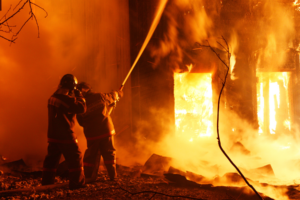
In 2018, a fire destroyed a 35-unit condominium building in Des Plaines, Illinois. The condominium association and its property manager had switched insurers from Allstate to Truck Insurance Exchange just before the fire, reducing coverage by nearly $1.6 million. The new policy’s replacement cost limit was $5.8 million, but the cost to rebuild exceeded $8.3 million. After the insurance proceeds ran out, the contractor walked off the job, leaving the building uninhabitable and its residents without their homes.
Unit owners filed a lawsuit against the condominium association, three of its directors, and the property manager. The lawsuit alleged that the defendants violated the Illinois Condominium Property Act (765 ILCS 605/1 et seq.) and breached their fiduciary duties by, among other things, (1) failing to purchase enough insurance to cover replacement costs; (2) accepting a contractor’s bid that exceeded the policy limit without unit owner approval; (3) failing to obtain competitive bids for the reconstruction project; and (4) failing to keep detailed and accurate project records.
Truck Insurance Exchange responded not by defending the insureds, but by filing a declaratory judgment action seeking a ruling that it owed no duty to defend them. Truck relied on three policy provisions: (1) the condominium liability coverage provision (which required bodily injury or property damage caused by the insureds); (2) Exclusion 8(c) of the D&O policy (which excluded claims arising from an insured’s failure to maintain adequate reserves or levy special assessments); and (3) Exclusion 12 (the “insured vs. insured” exclusion). The trial court sided with Truck on the condominium liability and Exclusion 8(c) arguments. The insured defendants and unit owners appealed.
Four Key Holdings from the First District
The Illinois Appellate Court reversed the trial court in part and remanded for further proceedings, reaching four significant conclusions.
- The Condominium Liability Coverage Did Not Apply
The court agreed with the trial court that the condominium liability coverage provision, which required the insurer to pay damages arising from “bodily injury,” “property damage,” or “personal and advertising injury”, did not cover the underlying lawsuit. The unit owners claimed that the board failed to purchase enough insurance and mismanaged the rebuild. That type of alleged breach is not the kind of bodily injury or property damage contemplated by a standard condominium liability policy.
- Exclusion 8(c) Did Not Bar D&O Coverage
The trial court had ruled that Exclusion 8(c), which excludes coverage for an insured’s failure to “establish or maintain adequate reserves or levy special assessments”, applied because maintaining insurance coverage and maintaining cash reserves are “functionally equivalent.” The Illinois Appellate Court rejected this ruling.
The court turned first to the plain meaning of the word “reserves.” Neither Merriam-Webster nor Black’s Law Dictionary defines the term to include insurance coverage. More significantly, the Illinois Condominium Property Act itself defines “reserves” as sums paid by unit owners and separately maintained by the board for specified purposes, but does not mention insurance. The court also noted that Truck itself acknowledged that no jurisdiction has treated insurance and cash reserves as functionally equivalent.
The practical implication of the trial court’s reading would have been to insert language into the policy that Truck never wrote. Illinois courts do not do that. When an exclusion is ambiguous, it must be construed against the insurer and in favor of the insured.
- The Reconstruction Mismanagement Claims Triggered the Duty to Defend
The underlying complaint also alleged that the directors and property manager failed to obtain competitive bids for the reconstruction project, failed to manage the project adequately, and failed to keep detailed and accurate records. Those claims had nothing to do with the adequacy of insurance coverage. They stood on their own legs and could give rise to liability regardless of whether the association had purchased sufficient coverage.
Under Illinois law, an insurer’s duty to defend is triggered whenever at least one theory in the underlying complaint potentially falls within the policy’s coverage. The threshold is low. Because the reconstruction mismanagement claims potentially fell within D&O coverage and were not excluded by any applicable exclusion, the court held that Truck had a duty to defend its insureds.
- The “Insured vs. Insured” Exclusion Presented a Fact Question
Exclusion 12 of the D&O policy, the “insured vs. insured” exclusion, bars coverage for claims brought by or on behalf of an insured association, unless the claim is brought entirely independent of any officer or director of the association. Truck argued that the unit owners’ lawsuit was effectively an extension of an earlier class action filed by a unit owner, which Truck alleged the Association’s directors had approved and assisted.
The Illinois Appellate Court agreed with the trial court that this argument raised a genuine question of fact. Truck had not presented actual evidence of collusion, only allegations in its own declaratory judgment complaint. Because a question of fact remained, judgment on the pleadings was not appropriate, and the issue needed to be resolved through further proceedings.
Key Takeaways for Illinois Community Associations
- Understand What Your D&O Policy Actually Covers
Directors and officers liability policies are designed to protect board members when they are sued for decisions made in their management capacity. This case confirms that Illinois D&O coverage extends to claims of reconstruction mismanagement, items like failure to obtain competitive bids, inadequate project oversight, and poor recordkeeping. If your Illinois community association is overseeing a major repair or reconstruction project, D&O coverage is required.
- Insurers Will Use Exclusions Aggressively
The trial court in this case accepted Truck‘s argument that failing to maintain adequate insurance was the same thing as failing to maintain adequate reserves. The Illinois Appellate Court reversed that decision, but only after the insured defendants had to fight their way through an appeal. The lesson is that exclusions are not self-executing. When an insurer denies coverage or refuses to defend, it is worth consulting counsel to evaluate whether the exclusion applies under the policy’s language and the allegations in the underlying complaint.
- Adequately Insure Your Building and Document the Decision
One of the central allegations in the underlying lawsuit was that the Association reduced coverage by nearly $1.6 million when it switched insurers, leaving the building underinsured for replacement cost. 765 ILCS 605/12 of the Illinois Condominium Property Act requires associations to maintain property insurance. Boards should periodically obtain updated replacement cost valuations from a qualified appraiser or contractor and ensure that the policy limit reflects those values. The decision to carry less coverage should never be made casually. If the board deliberately chooses coverage levels, the decision and its rationale should be documented in the meeting minutes.
- Manage Reconstruction Projects Carefully
The court’s decision to require Truck to defend the reconstruction mismanagement claims highlights that Illinois community association boards face real legal exposure for how they manage major projects. Illinois community association boards overseeing a significant reconstruction project should confirm that competitive bids have been obtained, maintain detailed records of project decisions and contractor performance, and stay engaged throughout the process rather than delegating oversight entirely to a property manager.
- Know Your Policy’s “Insured vs. Insured” Exclusion
Many D&O policies include an “insured vs. insured” exclusion that can bar coverage when one insured brings a claim against another insured arising out of association business. This is particularly relevant when a unit owner who serves on the board, or has any connection to the board, brings a lawsuit. Associations should be aware of this exclusion and consult with legal counsel when any related litigation arises.
- Establish and Maintain Adequate Reserve Funds
765 ILCS 605/9(c)(2) of the Illinois Condominium Property Act requires Illinois condominium associations to maintain adequate reserves. Additionally, the Illinois Condominium Property Act requires associations to maintain certain insurance coverage.
Conclusion
The Illinois Appellate Court’s decision in Truck Insurance Exchange re-emphasizes that Illinois courts will hold insurers to the plain language of their policies and will not permit exclusions to swallow the coverage that associations pay for. The case also highlights real vulnerabilities for Illinois community association boards that fail to maintain adequate insurance, manage reconstruction projects diligently, and keep thorough records. When a catastrophic loss occurs, the board’s decisions in the years and months before the disaster will be scrutinized, and a D&O policy, while valuable, is not a substitute for sound governance.
Is your association’s board operating with confidence in its insurance coverage and management practices? The attorneys at Hirzel Law, PLC are experienced condominium attorneys who can advise boards on insurance requirements, fiduciary duties, oversight of reconstruction, and D&O coverage.