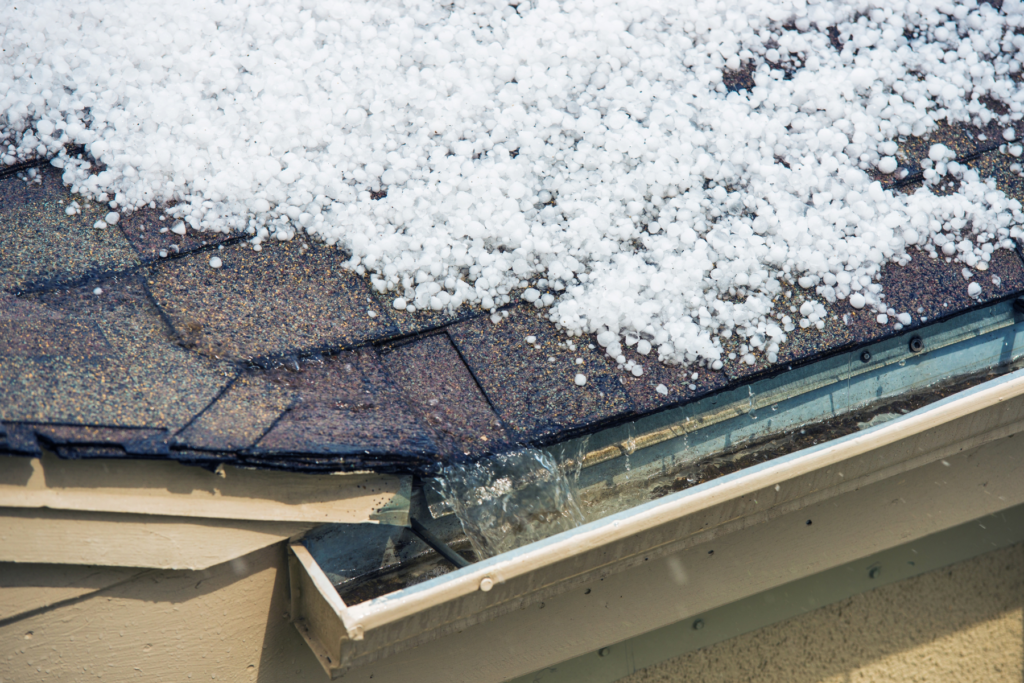
Can a condominium association take its insurer to trial after a hail damage insurance claim is denied? Under Illinois law, it can if it has evidence that a severe storm hit the property and caused the damage claimed. In Heritage Park Condominium Ass’n v. Greater New York Mutual Insurance Co., No. 23 C 3916, 2025 WL 672912 (N.D. Ill. Mar. 3, 2025), a federal court denied the insurer’s motion for summary judgment and allowed both the association’s breach of contract claim and its bad faith claim to proceed to trial.
Roofs are among the most valuable common elements the association is responsible for maintaining, and among the most vulnerable when severe weather arrives. After a hailstorm, a board will usually submit an insurance claim to its insurance carrier and fully expects the claim to be honored. However, insurers often do not honor such claims, and a denial can leave a board caught between unhappy owners and a roof in need of repair.
A recent decision from the United States District Court for the Northern District of Illinois, Heritage Park Condominium Ass’n v. Greater New York Mutual Insurance Co., No. 23 C 3916, 2025 WL 672912 (N.D. Ill. Mar. 3, 2025), shows how an association can push a disputed storm-damage claim past an insurer’s motion for summary judgment. This article summarizes the facts, walks through the court’s analysis, and offers practical guidance for Illinois community associations dealing with property insurance claims.
How a Hail Damage Insurance Claim Ended Up in Federal Court
Heritage Park Condominium Association is a sixteen-building residential community. In May 2022, Greater New York Mutual Insurance Company (GNY) issued Heritage Park a policy that included property and liability coverage, effective from May 14, 2022, through May 14, 2023. In July 2022, a hailstorm hit the buildings. Because the storm hit squarely within the coverage period, the association believed it was entitled to payment for the resulting damage.
Heritage Park contended that all sixteen buildings suffered roof damage, including dents to roof vents, granular loss, and spots on the shingles. It filed a claim, and GNY sent two inspectors to examine the roofs and prepare a report. GNY denied the claim. The association then retained a public adjuster to press the claim on its behalf, and GNY denied it again. Heritage Park sued GNY for breach of contract and for bad faith under Section 155 of the Illinois Insurance Code, 215 ILCS 5/155. GNY moved for summary judgment on both claims and also asked the court to exclude the testimony of the association’s meteorology expert and its damages-and-causation expert.
Did the Association Prove the Hailstorm Caused the Roof Damage?
Summary judgment is only appropriate when there is no genuine dispute of material fact. GNY did not dispute that the policy covered hail and wind damage, or that the sixteen buildings were covered when the storm hit. It argued that Heritage Park could not prove the July storm actually caused the damage it claimed.
The Two-Part Test for Wind and Hail Claims Under Illinois Law
Under Illinois law, an association pursuing a wind-and-hail claim must show (i) that a storm severe enough to cause the alleged damage occurred in the vicinity at the relevant time, and (ii) that the storm actually caused the specific damage claimed. Heritage Park met both with expert and witness testimony. Its meteorologist reconstructed the storm’s path and opined on the likely wind speeds and hail size. On causation, the association offered a damages expert who inspected the property, along with testimony from a contractor who had worked on the roofs for years. That contractor testified that he saw no hail damage during a March 2022 visit but observed hail damage, unusual granular loss, and blown-off shingles shortly after the July storm.
GNY’s own inspector had noted missing shingles during his examination of the roofs later that fall. The court held that this combination of evidence was enough for a reasonable jury to find both that a severe storm passed over the condos and that it caused the damage, so summary judgment was inappropriate.
Separating Storm Damage From Pre-Existing Wear and Tear
The court also rejected GNY’s argument that Heritage Park failed to separate the July storm damage from any pre-existing wear and tear. A hail history report showed that the other storms during the relevant window were not severe enough to have caused the damage at issue, and the size of the impact marks pointed to larger hail consistent with the July event.
Can an Insurer Exclude the Association’s Storm Damage Experts?
On the expert challenges, the court declined to exclude either witness. GNY argued that the meteorologist’s opinion was too uncertain to be admissible. The court disagreed, explaining that reliability under Rule 702 and Daubert does not require an expert to testify with 100% certainty; it requires a sound methodology applied to sufficient data. The meteorologist’s opinions rested on verified weather data from a national storm database and on accepted methods for analyzing it, and any residual doubt was for the jury to weigh on cross-examination. The court likewise found the damages expert qualified based on more than twenty years of experience in construction and restoration, and held that he could properly rely, in part, on the meteorologist’s report in forming his own opinions.
Illinois Bad Faith Claim Under Section 155 Survives
Finally, the court allowed the Section 155 bad faith claim to proceed. That statute permits an insured to recover attorney fees and an additional penalty when an insurer’s denial or delay is vexatious and unreasonable. GNY argued that bad faith is not a standalone claim and must fail if the breach-of-contract claim fails. GNY also argued there was no evidence it acted unreasonably, but the court pointed to testimony that GNY’s own adjuster had prepared repair estimates attributing the damage to hail. The court found that Heritage Park had a viable claim that GNY had ignored its own expert’s findings in denying coverage.
Practical Guidance for Community Associations Filing Hail Damage Claims
Fights over storm-damage coverage can be among the most common insurance disputes community associations face, and they tend to surface in certain instances when an insurer will deny a claim for being “cosmetic,” “pre-existing,” or the result of ordinary wear and tear after a large storm. To ensure a community association’s claim will be covered by insurance, boards can put their association in a stronger position long before a claim is ever filed by doing the following:
- Keep dated maintenance and inspection records, and photograph roofs and other major common elements periodically so you can show their condition before a storm.
- After a storm, promptly arrange an inspection and document the damage, noting the date of both the storm and the inspection.
- Retain qualified experts early, such as a meteorologist and a licensed adjuster or contractor with genuine construction and restoration experience.
- Obtain a hail-history report for the property to help separate the storm at issue from earlier weather.
- Preserve every report and estimate the insurer generates; they may contain admissions you can use.
- Read the policy closely for replacement-cost provisions, notice deadlines, and any appraisal clause, and involve community association counsel before a dispute hardens.
What Heritage Park Means for Illinois Condo Insurance Disputes
Heritage Park can be a useful case for community associations that are either currently battling with their insurance carrier or want to ensure that any future claims will be covered after a storm. With well-supported expert testimony and good documentation, an Illinois community association can prevail against an insurance carrier that refuses to approve a claim. Property insurance claims are fact-intensive, and the difference between a denied claim and a paid one often comes down to preparation and evidence.
The attorneys at Hirzel Law, PLC counsel Illinois community associations on insurance disputes, breach-of-contract litigation, and their governing documents, and can help boards protect their associations when a covered loss occurs.