Can an Illinois condo association be liable for a slip and fall on ice its own snow removal contractor left behind? In Tudela v. Tron, LLC, 2024 IL App (1st) 232438-U (Ill. App. Ct. 1st Dist., December 24, 2024), the Illinois Appellate Court said a jury could find that it is. The court reversed summary judgment for a condominium association and its snow removal contractor after a tenant slipped on broken icicle chunks on a common element driveway and broke her leg.
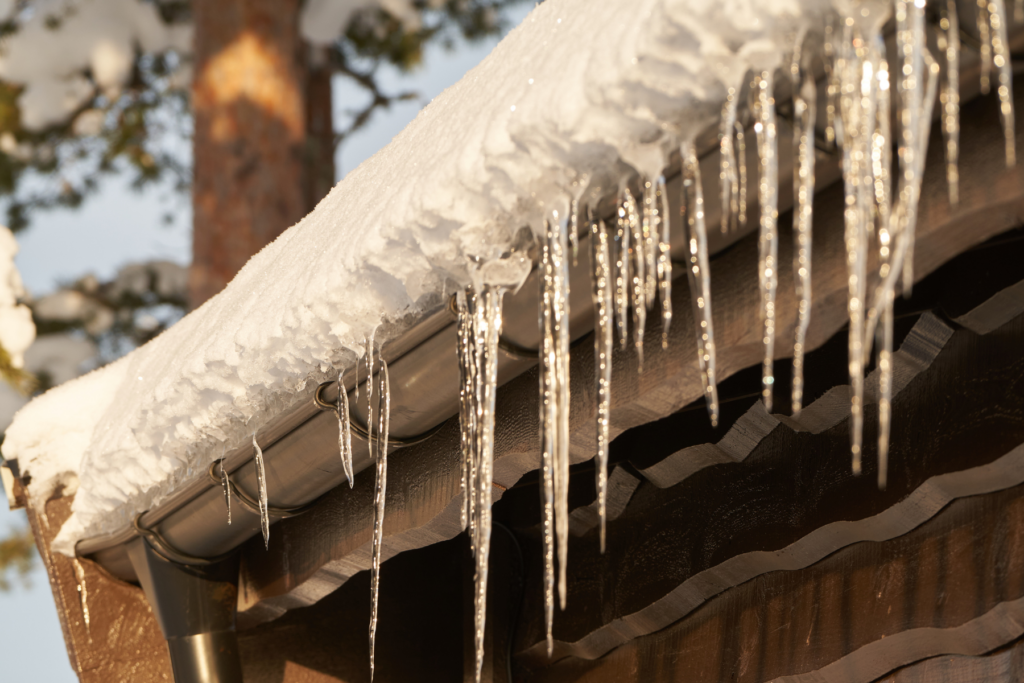
Every Illinois winter brings icicles along gutters and rooflines, and most condominium boards know that snow and ice removal is a major line item in the budget. Fewer boards appreciate that the way snow and ice are removed, and how well the building is maintained, can expose the association to slip and fall liability.
Tudela is an unpublished order filed under Illinois Supreme Court Rule 23. It is not binding precedent, but under Rule 23(e)(1) it may be cited for persuasive purposes. This article discusses the court’s decision and offers practical guidance Illinois condominium associations can use to reduce the risk of winter slip and fall claims.
How Broken Icicles Led to a Slip and Fall Claim Against a Condo Association
Christine Tudela rented a unit at Lexington Green Condominium Association (“Lexington Green”). Under Lexington Green’s governing documents, the condominium association was responsible for maintaining the common elements, including the roofs, gutters, and driveways. Lexington Green contracted with Best Lawns, Inc. (“Best Lawns”) for snow and ice removal.
On February 11, 2018, Tudela’s husband photographed long icicles hanging from the gutter above a garage door in front of their building. The next morning, after three to four inches of overnight snow, Lexington Green issued a work order directing Best Lawns to take down the icicles. While Tudela was out, Best Lawns plowed the driveway and knocked down most of the hanging ice.
When Tudela returned home, she slipped on the driveway and broke her left leg. After her fall, she saw a strip of ice chunks in front of the garage door and believed she had slipped on a piece of broken icicle. A photograph taken by a Best Lawns employee the next morning showed a patch of ice near the same garage door.
Tudela sued Lexington Green, alleging that it broke off the icicles and negligently left an unnatural accumulation of ice on the driveway. Lexington Green filed a third-party complaint for contribution against Best Lawns.
Discovery Revealed a Known Icicle Problem
Discovery did not help Lexington Green. A board member testified that icicles formed along the garage gutters because the heat tape did not always work. No one inspected the heat tape, and none of it had ever been replaced.
Lexington Green also had no inspection process for snow and ice and relied on residents to report problems. Its own service log showed numerous resident complaints about dangerous ice and icicles in the days before Tudela’s fall. The circuit court nonetheless granted summary judgment to Lexington Green and found that its contribution claim against Best Lawns was moot.
Why the Illinois Appellate Court Revived the Slip and Fall Claims
The appellate court reversed summary judgment in favor of both Lexington Green and Best Lawns and reversed the dismissal of the negligence portion of the amended complaint. It affirmed the dismissal of the willful and wanton and punitive damages claims. The court’s key findings are discussed below.
1. The Illinois Snow and Ice Removal Act Does Not Cover Driveways
The Illinois Snow and Ice Removal Act, 745 ILCS 75/0.01 et seq., gives residential property owners, and those they hire, limited immunity from liability for injuries caused by their efforts to remove snow and ice from sidewalks, unless the conduct was willful or wanton. Relying on Murphy-Hylton v. Lieberman Management Services, Inc., 2016 IL 120394, and Gallagher v. Union Square Condominium Homeowner’s Ass’n, 397 Ill. App. 3d 1037 (2010), the appellate court explained that the statute applies only to sidewalks, not driveways. Because the circuit court had already acknowledged its error on this point, the appellate court did not reverse on this basis alone.
2. Whether the Icicle Chunks Were an Unnatural Accumulation Was a Question of Fact
Under Illinois common law, a property owner generally has no duty to remove natural accumulations of snow and ice. However, a condominium association may be liable where it or its contractor creates an unnatural accumulation, or where improper maintenance of the property causes one.
The court found that Tudela identified an unnatural source of ice, testified that she slipped on it, and pointed to Best Lawns’ own photograph confirming ice on the driveway the next morning. A jury could therefore reasonably find that Best Lawns knocked down the icicles and negligently left the pieces on the driveway.
3. Notice Was Also a Question of Fact
Lexington Green argued that it had no notice of the ice because Best Lawns finished work at 3:00 p.m. and Tudela fell less than an hour later. The court disagreed. Under Illinois law, a plaintiff does not need to prove notice where the defendant or its contractor created the condition.
Even if notice were required, the history of icicle problems, the unmaintained heat tape, and the resident complaints created a question of fact as to whether Lexington Green had actual or constructive notice.
4. The Condo Association and Its Contractor Voluntarily Assumed a Duty to Remove Snow and Ice
The court also found that Lexington Green voluntarily assumed the duty of removing snow and ice from the driveway because its governing documents made the association responsible for maintaining the common elements. Where a property owner promises to keep property free of snow and ice and fails to do so, the owner may be liable even for a natural accumulation.
Similarly, Best Lawns could be liable to Tudela because it contractually agreed to remove snow and ice and accepted the work order on the day of the accident.
5. The Facts Did Not Rise to Willful and Wanton Conduct
The court affirmed dismissal of the willful and wanton and punitive damages claims because Lexington Green retained a snow removal contractor and issued work orders in response to the February complaints. The condominium association’s conduct may have been negligent, but it was not outrageous or shocking to the conscience.
How Illinois Condo Associations Can Reduce Slip and Fall Liability This Winter
1. Do Not Rely on the Snow and Ice Removal Act for Driveways and Parking Areas
The Act provides limited protection for residential sidewalks. Associations should not assume it covers driveways, parking lots, or other paved common elements.
2. Inspect and Maintain Heat Tape and Gutters
An association that installs heat tape should have a written schedule to inspect it before and during the winter season and document that it is working. Gutters and roof drainage should also be reviewed for defects that cause recurring icicles.
3. Do Not Rely Solely on Owner Complaints
In Tudela, the condominium association’s own complaint log helped establish notice. Associations should require management or the contractor to proactively inspect for icicles and ice buildup after storms, and should document each complaint and the action taken.
4. Have Counsel Review Your Snow and Ice Removal Contract
Lexington Green’s contract did not include routine icicle removal. Associations should have their attorney review vendor contracts to confirm that the scope of work:
- covers icicle removal and cleanup of ice debris;
- requires a post-work inspection;
- includes appropriate indemnification and insurance provisions; and
- contains any additional terms that can help limit the association’s liability.
The Bottom Line for Illinois Condo Boards
The appellate court’s decision in Tudela is a reminder that hiring a snow removal contractor does not end a community association’s responsibility for winter safety. When an association or its contractor creates an unnatural accumulation of ice, or fails to maintain the systems designed to prevent it, the association may face slip and fall liability.
Before winter, condominium associations should maintain their heat tape and gutters, respond to resident complaints, and have counsel review their snow and ice removal contracts. The experienced Illinois community association lawyers at Hirzel Law, PLC can review your association’s vendor contracts and governing documents to help limit its exposure to slip and fall claims.